A PRIVATE LIFE 103 minutes; R; directed by Rebecca Zlotowski Critic’s Grade: B+
When in France, do as the French do.
You know, smoke cigarettes in the rain, use psychobabble as a defense mechanism to push away your adult son (Vincent Lacoste), act as if you’re too busy and/or sophisticated to cuddle your grandson, live in an impossibly large, well-appointed apartment lined with books and limned with gleaming wood surfaces, hook up with your ex-husband (Daniel Auteil) and have a psychedelic past-life experience with the help of your wacky hypnotherapist (sans drugs). We all go a little mad sometimes.
Don’t forget to imbibe heaping helpings of good wine. For good measure, visit the gorgeous, majestic Bibliothèque Mazarine, the oldest library in France; it opened in 1643.
Speaking French approximately 98% of the movie (but cursing in English), the ever-reliable Jodie Foster nails the role of an American-born therapist who’s reeling from the apparent suicide of a patient.
She and said ex proceed to go all Miss Marple/Hercule Poirot on us, inserting themselves into precarious situations while attempting to solve the whodunit, which is really an if-she-did-it, how’d-she-do-it and why’d-she-do-it.
Foster being Foster, a screen actress since her debut at age 5 on television’s “Mayberry R.F.D.” and a double Oscar winner who was first nominated for 1976’s “Taxi Driver,” she easily brings viewers along on her Paris murder (maybe) mystery.
The camera still loves Foster after all these years, and she still knows how to use that dynamic to her advantage.
Bonus: A cameo by legendary documentary filmmaker Frederick Wiseman, now 96. Plus the maybe ironic, maybe misdirection-coded presence of Talking Heads hit “Psycho Killer” on the soundtrack. Twice. Nice.
A centuries-long pain in the heart, and pains in necks, too. Newfangled Drac tale + old-fashioned eternal love. Vampire-created perfume: WTF? Powdered wigs galore in a goofy ballroom dance sequence that wouldn’t be out of place in a Broadway musical, on TikTok or at one of those weddings where they make the brides and groomsmen put on a show.
All that, digitally created living gargoyles like Oz’s flying monkeys and Christoph Waltz as a bloodsucker-hunting rogue priest, too. Fangs for the memories!
“Dracula” gets a bonus half letter grade for the weirdness factor.
Copyright 2026 by Philip Booth. All rights reserved. Follow me at Philip’s Flicks on Letterboxd.
It’s hard not to still think of Jordan Peele as half of Key & Peele, for my money the funniest sketch-comedy duo of our time. But just three films and five years into his directing career, the filmmaker has found a place for himself near the center of the film-culture universe.
Thanks to the scares and provocations about race, privilege and belonging that he raised with his stunning 2017 debut film “Get Out” and 2019’s shocker “Us,” not to mention their success at the box office, expectations for his big-budget “Nope” have been sky high.
Would his new one, released during a period of time in our country that again feels fraught with racial, cultural and political tensions, have something fresh and trenchant to say about those Big Issues? In a post-pandemic era when at-home viewing is all the rage, and even many major studio films make their debuts on the streamers, could Peele’s latest also do the impossible — lure filmgoers back to theaters for something other than a Tom Cruise movie, and mount “Independence Day”-size box office returns?
That’s a mighty heavy burden, somewhat unfair and, for viewers, ultimately irrelevant. What matters most is whether “Nope” succeeds on its own terms. Short answer: Yep, resoundingly so, although with an asterisk — some thematic elements are loosely connected, at best. Still, I already want to see it again, to catch visuals and dialogue that I may have missed the first time.
“Get Out” is so striking, in part, because it combines insightful social commentary with a rather narrowly focused, readily described horror fable: Black boy meets white girl, girl takes boy home to meet the parents, and boy finds out he’s been betrayed in a manner that nobody saw coming. “Us,” too, has a relatively straightforward narrative — solidly middle-class African-American family of four is terrorized by their doppelgangers — although it comes with significantly more bloodletting.
By comparison, “Nope” is much less tightly constructed, a bit all over the place, as if Peele had been collecting intriguing if not necessarily related ideas and concepts in a giant notebook over the years, waiting for the perfect opportunity — in this case, a $68 million budget and the loyalty of fans who flocked to his first two films — to bring them all to life.
Peele, again directing from his own script, relates a tale encompassing African-American cowboy siblings, a Gold Rush-themed attraction with an alien sideshow, a fake ill-fated ‘90s sitcom about a seemingly domesticated chimp, and a menacing UFO.
“Nope” concerns itself with all of the above mentioned elements as well as themes around the art and craft of moviemaking, the contemporary quest for overnight celebrity, skewed history as entertainment, and something or other about the bad things that happen when humans foolishly try to tame animals, or aliens. Or maybe their worst impulses.
The movie benefits from frightening passages, a bit of (mostly implied) gore, some unexpected twists and plenty of comic relief. And Peele elicits winning performances from “Get Out” breakout star Daniel Kaluuya, Nickelodeon vet and “Akeelah and the Bee” star Keke Palmer, and Steven Yeun, of “Minari” and television’s “The Walking Dead.”
Steven Yeun, as Jupiter’s Claim owner Rick “Jupe” Park
The screenplay’s slightly fuzzy focus, though, doesn’t do irreparable damage to a movie that feels “big” in every sense of the word. Its sprawling mountains-and-desert Western vistas and best, most frightening set pieces — no spoilers, but don’t look up! — deserve to be experienced on the largest screens around, with sound systems capable of handling the volume and intensity of the creative sound design.
And yet “Nope,” after an unsettling prologue — an image of a fallen female body and a bloodied simian wearing a birthday hat, on a TV studio set with a blinking “applause” sign — begins small, as something of a family drama.
Reserved, sad-eyed Otis Haywood Jr. aka OJ (Kaluuya), his excitable sister Emerald (Palmer) and stern aging dad Otis Sr. (veteran character actor Keith David) are striving to sustain their once thriving business breeding horses on a farm in the SoCal desert. The Haywoods made a pretty penny lending their animals to Hollywood until the rise of CGI effects, which let productions replace real horses with digital facsimiles. The family traces its lineage to a forebear who was the horseback rider in the world’s first moving image, “The Horse in Motion,” created in 1878 by Eadweard Muybridge.
Then the craziness kicks in. The electric power flickers and then dies off at the family’s rambling, picturesque farmhouse, as Emerald’s soul and rock vinyl — she loves to blast her tunes loud enough to be heard a mile away — winds down to a dead stop and lights dim and fade out. Weird stuff rains down. A horse is injured in bizarre fashion. Someone suffers a freak tragic accident.
And up there in the big California sky is the only stationary cloud this side of a movie set; defying science and logic, it never moves. Nearby, there’s an odd new alien attraction at Jupiter’s Claim, the Old West tourist trap run by Rick “Jupe” Park (Yeun), once a child star on the TV show, “Gordy’s Home!” referenced at the movie’s start.
The plot primarily centers on the attempts of Emerald, Otis and a pair of new friends — a tech nerd, a famous Hollywood cinematographer — to get photographic evidence of the strange happenings on their piece of the planet. If they could only get “the money shot” or, better yet, “the Oprah shot,” and the financial reward to follow, the siblings could keep the family business alive. In one of many humorous touches, a TMZ cameraman tries to hone in on the alien-pic action, too.
Yes, cowboys, cowgirls and aliens of a sort figure into Peele’s movie, as advertised. But it’s closer in spirit and appearance to a Spielberg or a Hitchcock film than to an overwrought, video game-like film like 2011’s “Cowboys & Aliens,” nominally in the same vein.
Bottom line: Peele has unleashed a genuinely entertaining sci-fi/horror spectacle, with the always welcome bonus of a few thought-provoking narrative strands to ponder after the credits roll. That’s more than enough when it comes to what most folks want from a trip to the theater.
And am I alone in hoping to someday learn the full story of Gordy, the once lovable chimp who went ape, and, in the film’s universe was played by Chris Kattan on “SNL” (another brilliant bit)? Hint, hint.
“The Requin” offers a moderately promising, if familiar, set-up: A married couple, troubled by a recent domestic tragedy, vacations at a resort in a tropical paradise. There, they spend their days lolling along the beach, and their nights in a “floating villa,” an open-air room just a few feet from the water. Warm breezes blow, sheer curtains billow, and ballads flicker on the soundtrack.
The two (Alicia Silverstone and James Tupper) indulge in seaside views, fruity drinks, exotic cuisine, impromptu swimming and snorkeling, and the perhaps welcome social and cultural isolation of temporarily living in a place where nobody looks like them, or speaks their language.
Alas, on the horizon are dark clouds — it’s monsoon season in Vietnam, after all — along with psychological threats to the pair’s marital bonds. Not to mention that awfully temperamental wi-fi connection. There could be worse things than not being able to readily document your happy travels on social media.
Right on cue, here come the cheap thrills and unconvincing horrors: In rolls a big storm, followed by the arrival of menacing creatures from the deep. And, eventually, the kind of “I’m-so-scared” moaning, shrieking and whimpering from Silverstone that grows scarier and more annoying by the minute.
“The Requin,” reportedly shot using green screens at Universal Studios Orlando, is like a poor man’s cross between “Jaws” and “Open Water,” starring the most talented actors from your high school. Bonus: The title — French for “shark,” ya know — has to be the year’s silliest sounding and most off-putting name for an English-language movie.
In case you need to know: The cast of “The Requin,” mostly a two-person affair, also includes Deirdre O’Connell and Jennifer Mudge as Silverstone’s mom and sister, respectively, seen only on video screens. Credit or blame for the pedestrian direction and soapy screenplay goes to Vietnamese-born Le-Van Kliet (“The Princess,” “Furie”).
Aside from the gimmicky shark action, the special effects are passable. But the filmmaker succeeds in neither plumbing the depths of a relationship sinking under the weight of trauma nor creating the kinds of chills and suspense suggested by the harrowing circumstances faced by the movie’s lead characters. Consider it a lost opportunity.
Message to all those other sea-horror movies: Breathe easy. This “Requin” is no real threat.
The Black Phone 107 minutes; R Critic’s rating: B+
The rotary phone is back! Long live the rotary phone! Sorry, wrong number: Nobody, of course, pines for an old-school voice communication device requiring you to dial each digit in the number one at a time, and then wait for the thing to slowly spin back around before moving to the next digit.
Bonus downsides: 1)You had to pick it up and say hello before you knew who was on the other end. A romantic interest? A bill collector? Your arch rival? Your Mom, telling you to get off the phone and do your homework? Lumbergh, making you come in to work on Saturday? An evil entity from another dimension? 2) In the days of party lines, friends or foes alike could easily listen in on your conversations, unbeknownst to you, without troubling to hire a team of sweaty nerds in a surveillance van to park down at the end of your block. The Conversation,” anyone? (The visionary 1974 techno-thriller was rereleased two years ago).
Ain’t got time for all of that in the connect-right-now Digital Era. But I digress.
“The Black Phone,” the latest outing from Blumhouse Productions, best known for quirky horror movies including “Split,” “The Purge” and “Paranormal Activity,” cleverly assigns the title object a key role.
Good news: The film, which concerns itself with much more than a vintage phone, boasts the kind of originality and edginess that make for a fully engaging movie experience, and just may help it become a summer sleeper.
Ethan Hawke, as The Grabber
The most effective horror, in film and fiction, uses carefully detailed atmospherics to create a palpable mood. And the best, scariest entries in the genre also deploy the kind of suspense that serves to create creeping dread and generate occasional jump scares.
“The Black Phone,” directed by Scott Derrickson (“Doctor Strange,” “Sinister,” “The Day the Earth Stood Still”) possesses both qualities in droves.
Derrickson’s movie, adapted from a short story by Joe Hill, aka one of Stephen King‘s writer sons, is short on gore — this isn’t a by-the-numbers slasher movie or torture porn, thankfully — and long on surprises and hold-your-breath chills and thrills.
The filmmaker and his co-screenwriter, C. Robert Cargill, start strong by offering an evocative setting. It’s Denver, circa the mid-’70s. Boys with long hair, Cheech & Chong t-shirts and denim jackets variously tool around a lower middle-class neighborhood on their bicycles, get their testosterone-fueled kicks by fighting with frenemies at school, and perfect their video-game skills at the local convenience store. When not hanging with their guy posse, they flirt with girls wearing flared jeans and colorful fringed ponchos. Guitar-rock anthems like the Edgar Winter Group’s “Free Ride” and Sweet’s “Fox on the Run” rule the airwaves. Pink Floyd is in the mix, too.
The look of the film, washed-out and grungy around the edges, enhances its feel; it’s a bit reminiscent of movies made during the time when this movie is set. Occasional gritty dream sequences, images of family life and evil goings-on akin to spooky home movies, inject a true-crime vibe into the goings-on. Are we watching a partly fictionalized “Dateline” account of something wicked that came this way a half-century ago?
Mason Thames and Madeleine McGraw
At the center of the story are Finney (Mason Thames), a smart kid who’s obsessed with NASA and space exploration, and is frequently bullied by dumb tough boys. He’s routinely shadowed by his take-no-prisoners little sister Gwen (Madeleine McGraw). The two rely on each other to navigate tricky social terrain at school and deal with the unstable behavior of their abusive single father (Jeremy Davies). His alcohol-fueled grief over the death of his wife, the kids’ mom, sometimes metastasizes into angry tirades and violence against his own children.
The siblings, too, live in a world threatened by an ongoing tragedy: Area boys keep disappearing, as we learn via “missing” flyers, eerie nighttime neighborhood searches, and the haphazard investigative work of a pair of not-so-bright police detectives sporting period-appropriate bad haircuts, ill-fitting suits and wide ties. They repeatedly badger Gwen over why she knows certain details of a recent disappearance that were never released to the press.
It’s impossible to reveal much more about the narrative without spoiling the pleasures of this type of film. Suffice it to say that “The Black Phone” imaginatively combines a flesh-and-blood crime mystery with supernatural elements — some sequences are reminiscent of “The Sixth Sense” — and does so seamlessly.
Thames and McGraw are real finds. The young actors handily hold attention during their scenes alone and together; these somewhat naturalistic turns feel like break-out performances.
Ethan Hawke, so brilliant as abolitionist John Brown in Showtime’s recent “The Good Lord Bird” series, and a revelation again in Paul Schrader’s “First Reformed” (2017) here is cast against type. It’s a reunion with Derrickson and Cargill; the three worked together on the director’s “Sinister” (2012).
Hawke primarily uses his voice and body language, almost never showing his full face, to create one of the creepiest and most frightening movie villains of at least the last decade. “Hold my beer,” says Hawke’s The Grabber to the clown from “It,” penned by Hill’s famous dad.
Yes, as filmgoers probably already know from seeing the film’s poster or trailer, fiendishly scary masks are involved. Be afraid. You know you want to.
Director David Cronenberg, whose latest cinematic provocation “Crimes of the Future” recently opened nationwide, is getting the retrospective treatment with a six-film series playing the Bill Cosford Cinema in Coral Gables over two weekends in July.
The retrospective is curated by former Miami Herald film critic Rene Rodriguez, now manager and programming director for the Cosford, affiliated with the University of Miami School of Communication. The series opens July 15 with “A History of Violence,” and will be followed by “The Fly” (July 16), “Crash” (July 17), “Shivers” (July 22), “Dead Ringers” (July 23) and “Videodrome” (July 24).
Rene will introduce each of the screenings. All are at 7:30 pm except for “Crash” and “Videodrome,” which will play at 7 pm.
New to the movies of the Canadian filmmaker? Prepare for some mind-bending, sometimes squirm-inducing film trips and strikingly original cinematic visions that are unlike those of any other filmmaker. And best not to watch on a full stomach.
For more details on the Cronenberg retrospective, and to buy tickets, click here.
David Cronenberg‘s latest head-twisting journey into the universe of the bizarre takes us to a place located in the not-distant future — or simply untethered from time? who can really say? — where the denizens of a mysterious unidentified land certainly appear to look like us.
But these characters behave like a species from another planet, and the trip offers more than a bit of cinematic deja ju for fans of the Canadian filmmaker.
Got body horror, as in fears about an indescribable thing growing inside of you that might kill you or someone else? Check. How about the melding of flesh-and-blood life forms with non-human entities, as a next step in mankind’s evolution? Yep. Sexual desire triggered and fulfilled by pain, or at least, from extreme discomfort? Naturally. Technological advancements as conduits to human salvation? Of course. Unintended consequences of medical manipulation gone wild? Gooey, slimey, oozing objects that may or may not have something to do with body parts? Folks who sometimes move about as if sleepwalking, have dead-eyed stares, and frequently speak in an affectless manner? Check, check, and check.
“Crimes of the Future,” released six years or so after the provocation-minded director, now 79, suggested that he was considering retiring due to the difficulties of obtaining financing for his productions, is perhaps even more grim and gruesome than many of the Cronenberg films it directly references, particularly including “Videodrome,” “eXistenZ,” “Crash,” “Dead Ringers,” “The Fly” and “Scanners.” On the other hand, the new one doesn’t pack nearly the same emotional wallop punch as did some of those movies.
Is that because viewers are less disturbed by these types of images? Or is it because self-consciousness has crept into the approach of a film artist who appears to be recycling his own tried-and-true themes? Is the law of diminishing returns at work here?
Cronenberg, working from his own original screenplay for the first time in more than 20 years, knows how to construct a strikingly original, wildly creative setting that doesn’t remotely resemble anything else that’s likely to flicker across the big screen this year. His new tale, shot in Greece, appears to be set in a vaguely European, oddly underpopulated seaside village, with winding cobblestone streets and ancient buildings, the exteriors of which are defaced with graffiti. Everything in this vacuum-sealed universe is grey and dark, and vast warehouse-size spaces and cramped offices alike look as if they’re located in some isolated, mostly forgotten Eastern Bloc burg. Bright colors are few and far between. Spiritual and emotional oppression seem to reign. What kind of fresh hell is this, anyway?
Cronenberg gives no mercy in the opening act, immediately throwing viewers into a bit of dramatic action that transpires between a boy (Sozos Sotiris), playing at the shore, and a young mother (Lihi Kornowski), calling to him from the balcony of a nearby home. Shortly later, the kid is in a tiny bathroom, furiously chewing up a plastic wastebasket. And then comes a disturbing sequence that won’t be described here (no spoilers). The filmmaker seems to be issuing the first of several similar dares: If you can stomach this, then maybe you’ll hang on for the oddities and horrors to come.
Soon, enough, the protagonist arrives, in the form of Saul Tenser, played by Cronenberg regular Viggo Mortensen (A History of Violence, Eastern Promises, A Dangerous Method). Frequently seen hunched over, writhing in digestive pain — it’s all tense, per his surname — and hiding behind a black hooded cloak, he’s enmeshed in a long-term sexual and business relationship with Caprice (Lea Seydoux), a former trauma surgeon. The two are performance artists whose specialty is live surgery on stage, where she uses a fleshly controller to guide instruments that cut into the torso of her partner, who lays inside a contraption called a Sark (variation on “sarcophagus”?). Nearby, a screen flashes “Body is Reality.” A hush settles over the crowd as the grisly proceedings unfold.
For its audience of entranced cool-kid viewers, some of whom later thrill to the dancing of a man who has sewn — grown? — human ears all over his body, the act is artistic and erotic. “Surgery is the new sex,” exclaims one believer. But for the performers, it’s also pragmatic: Saul inexplicably is regularly growing new organs. Rather than waiting to see what might unfold if a new system of organs were to develop on his insides, he chooses to excise the invader from his body. He simultaneously views himself as simply the nearest available warm body in the duo’s shows and also as a first-born creature, an accidental messianic figure whose biological transformation points to the shape of humans to come: “I’m just a mechanic,” he explains. “I install doors and windows into the future.” Later, he describes his unsolicited gift in terms that a pregnant woman might use: “I do have something cooking (inside), maybe a few things.”
Saul is able to go under the knife, without anesthesia, because humans who occupy this era have lost their capacity to feel pain. For fun, they practice surgery on one another in the open streets. These images suggest nothing as much as glazed-over young people shooting up with heroin or other drugs — surgery may be the new sex on this planet, but it’s also the new high.
And growing organs is the new pregnancy, available to males, females or the sexes in between. As ever, though, the government has a vested interest in all the bodily comings and goings. Thus the existence of the National Organ Registry, located in a dingy office staffed by a couple of maybe loveable oddballs played to near-perfection by Don McKellar and Kristen Stewart. The two, who practically melt in Saul’s organ-star presence, are the source of some of the most lighthearted moments in a film that benefits from some well-measured injections of dark comedy.
The film’s narrative is also driven by the a “New Vice” police detective’s (Welket Bungue) investigation into a cult of plastic purple-bar eaters led by Lang Dotrice (Scott Speedman), the father of the boy seen in the opening sequence.
If “Crimes of the Future” (not to be confused with Cronenberg’s hourlong 1970 movie of the same name) is classified as a genre film, it might best appreciated as a multi-genre effort, a potentially combustible blend of sci-fi and horror, with a crime story and psychological drama tucked into the mix, heavily sprinkled with social commentary about human evolution, sexual variations, and environmental catastrophe.
While neither as accomplished nor as riveting as the filmmaker’s earlier work, and fitted with an abrupt ending that feels as if Cronenberg simply couldn’t settle on a satisfying conclusion, “Crimes” stands as another quite striking vision from a veteran innovator and provocateur whose film art is unlike that of anyone else making theatrically released feature films. That’s no mean feat.
Movies are rated from 0 to 5 stars. Follow me on Letterboxd
There’s not much comic relief to be found in “Texas Chainsaw Massacre.” But it’s hard not to chuckle at least a little bit during one moment of extremely gory carnage, when the title goon, his chainsaw fired up and ready to go, prepares for another round of mindless, bloody slashing.
The 20something hipsters, assuming that the intruder is just part of the night’s entertainment, hold up their phones to live-stream the fun. And their followers start posting comments, naturally: “Who hired this clown?” writes davidbluegarcia. “Where is this, I wanna go?!?” asks ChaseAndersenTX. And, best of all: “THIS LOOKS SO FAKE,” says badhombre6666.
Garcia, of course, is the Texas-based director of the splatter fest (and the above is his actual Twitter handle), and Bad Hombre is one of the three production companies behind the film. What they’ve wrought is a retread that desperately wants to be a franchise reboot: It makes repeated references to Tobe Hooper’s chilling 1974 horror flick, controversial for its time, pretending that the other sequels never existed, but does practically nada to expand or enlarge the story of old Leatherface (Mark Burnham) and his murderous rampaging. Oh, but it does drop the “The” from the title. Presto, change-o!
The setting this time is a remote, abandoned Texas burg called Harlow, where a group of trendy, good-looking young folks have driven seven hours from Austin to party and stake their claims to various pieces of property on the town’s dusty main street. They want to gentrify the place and make it an artsy shopping destination for other hipsters. Could it become the Santa Fe of the Lone Star State? Here’s where the restaurant will go, they say, and over there is where they’ll put the art gallery. Or they just want to get away from the hustle and bustle of big-city life for a more peaceful lifestyle. Or something. It’s not quite clear.
After unintentionally causing the death of an elderly local resident, all hell breaks loose in the little Texas ghost town. The body count mounts, and narrow escapes are followed by brutal killings. Will anyone get out alive?
Garcia and Co. appear to sort of want us to care about some of these potential victims, including chef Melody (Sarah Yarkin) and her little sister Lila (Elsie Fisher, such a find in 2018’s “Eighth Grade.”) The latter is burdened with an extraneous storyline — she’s a victim of a mass shooting at a school with a name resembling that of Marjorie Stoneman Douglas High School, where a real-life attack took place just four years ago. It’s a tacky touch, maybe meant to add some kind of real-life resonance to the thing. And yet we still don’t care.
Garcia nevertheless gifts viewers with one welcome party favor: His “Massacre” clocks in at a mere 83 minutes. Thank goodness for small mercies.
Movies are rated from 0 to 5 stars. Follow me on Letterboxd.
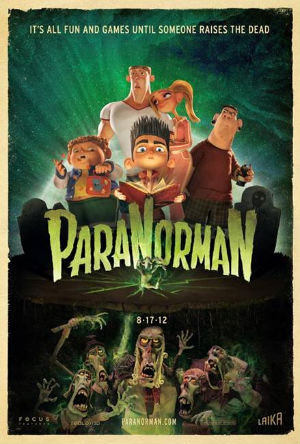
Stars the voices of Kodi Smit-McPhee, Anna Kendrick, and Christopher Mintz-Plasse. Directed by Chris Butler and Sam Fell, from a script by Fell. 93 minutes. Rated PG. Critic’s grade: B+
Norman (Kodi Smit-McPhee) sees dead people. In particular, the boy, a horror-loving social outcast dubbed a “freak” by his schoolmates, routinely talks to his supportive grandmother (Elaine Stritch) and can’t go down the street without having conversations with the spirits of local neighbors, a suicide victim, a leather-jacketed tough, and even a dog that met its untimely end thanks to a passing car.
The kid treats all the paranormal activity as just another trial of adolescence, something he has to put up with alongside an annoying, constantly primping older sister Courtney (Anna Kendrick), disbelieving parents (Jeff Garlin and Leslie Mann) and the mean and pimply school bully Alvin (Christopher Mintz-Plasse).
In the context of his hometown, Norman’s visions, in “ParaNorman,” don’t seem so out of place: Everyone in the 300-year-old Blithe Hollow, built on a tourist industry based on a local legend concerning a witch, seems to turn out for the local school’s production of “The Witch’s Curse.”
Respect and a little redemption comes Norman’s way courtesy of his crazy, mysterious Uncle Prendherghast (John Goodman), who, before dying, has a secret for the kid: “The witch’s curse is real, and you’re the one who has to stop it,” he says. Leading a gang of kids, including chubby friend Neil (Tucker Albrizzi), sis, Alvin, and Alvin’s gym-rat older brother Mitch (Casey Affleck), Norman plots to end the curse. Along the way the gang encounters a frightening graveyard, overeager Puritans, zombies, torch-bearing townspeople, and that would-be scary witch.
The bristles of Prenderghast’s massive beard represent just one image/texture that comes alive in the hands of co-directors Chris Butler and Sam Fell, wielding a brand of stop-motion 3D magic that also lifted the visual wizardry of “Coraline.” Butler, the new film’s screenwriter, was the storyboard supervisor on “Coraline,” and both movies were made at the same studio, Laika.
Young viewers undoubtedly will be captured by the slightly scary story, while the older set will be taken by the handcrafted look and feel of the film, and its references to everything from the “Scooby-Doo” cartoon series to vintage B-grade horror and the likes of “Friday the 13th”; the theme from the latter’s soundtrack is the ringtone on Norman’s phone. Positive, uplifting messages — the power of forgiveness, tolerance for others — abound, too. “ParaNorman” counts as one of the most intriguing achievement animations of the year, so far.
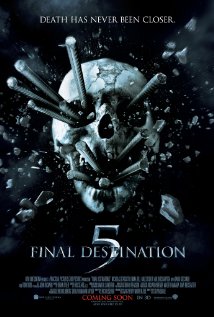
Starring Nicholas D’Agosto, Emma Bell, Miles Fisher, and Courtney B. Vance. Directed by Steven Quale. R; 92 minutes; Grade: C-
Near the end of Final Destination 5, a ritualistic exercise in relentless mutilation and mayhem, a potential victim has a frightening encounter with a meat grinder in a restaurant kitchen. It’s a pointed reminder of how this series, regularly churned out since its somewhat intriguing debut 11 years ago, routinely and methodically grinds up its young victims. Who needs a serial killer when supernaturally induced chains of coincidences can so effectively do the trick?
The latest entry, helmed by first-time director Steven Quale, a journeyman cinematographer and special effects wizard best known for collaborating with James Cameron, is no exception. Death, which “doesn’t like to be cheated,” as a spooky coroner (Tony Todd) counsels, takes pleasure in dispatching various underdeveloped characters via multiple grisly methods. Naturally, impalings abound, but there are also torso slices, fire deaths, a particularly disgusting gymnastics accident, and several bodies that go splat.
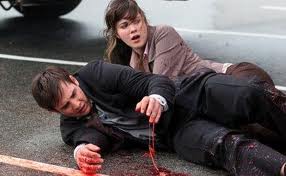
The tragedies are set in motion after Sam (Nicholas D’Agosto), employed by a company called Presage — get it? — has a frightening vision and convinces seven colleagues to abandon the bus they’re taking to a business retreat. Minutes later, the suspension bridge they’re on collapses, and 17 of the octet’s coworkers plunge to their deaths. The two sequences, the accident in Sam’s premonition followed by the real thing, are horrific if spectacular, as cables snap, concrete cracks, and vehicles and bodies go flying. 3D, introduced to the series with the fourth installment, is particularly effective here.
The plot, as such, thickens with the arrival of an FBI investigator (Courtney B. Vance) initially determined to discover what Sam knew, and when he knew it. As the death toll mounts, the law man grows increasingly baffled. And the survivors, including characters played by Miles Fisher and Emma Bell, become increasingly frantic, particularly when they realize that it’s all a zero-sum game (I won’t spoil this minor twist).
Levity isn’t exactly the forte of Final Destination movies, but No. 5 certainly offers several darkly comic moments, including an office manager (David Koechner of “The Office”) who keeps forgetting that a nerdish tech support guy (P.J. Byrne) isn’t one of the dead, and a smiling Buddha statue that plays a part in one killing. “Dust in the Wind,” the Kansas hit, makes several cameos.
Is this the last chapter? This film’s coda seems to suggest that it’s over, via a montage of horrific deaths from the first four movies. Then again, I have a premonition that a box-office bash could very well lead to FD6. Don’t say I didn’t warn you.
Final Destination 5 opens wide Aug. 12 (and, in some locations, tonight at midnight).
From the sort-of sublime (the Oscars) to the ridiculous …
Bad movies deserve a little love, or faux love, too. That’s the motivation behind the Razzies, formally known as the Golden Raspberry Awards.
Ceremonies for the dubious honors — honoring the year’s worst achievements in film — were held on Saturday at the Barnsdall Theatre in Hollywood.
The genuinely stinky Mike Myers “comedy” The Love Guru was named worst picture, and the star took home the award for worst actor.
Paris Hilton, who may or may not be as funny as Jerry Lewis, in France, scored other top honors. She was named the year’s worst actress, for The Hottie and the Nottie (to call the movie “execrable” would be redundant), and the worst supporting actress for “slasher musical” Repo: The Genetic Opera. Hilton made it a triple play as part of the worst screen couple (with either Christine Lakin or Joel David Moore), also for The Hottie and the Nottie.
More “winners”:
Worst director: Uwe Boll, 1968: Tunnel Rats & In the Name of the King: A Dungeon Siege Tale & Postal





 Bad movies deserve a little love, or faux love, too. That’s the motivation behind