This summer, I’ve made an extra effort to catch up on my dead-trees reading. As usual, I’ve frequently been caught in the middle of a handful of books simultaneously. It’s a bad habit, but one I can’t seem to break.
I’ve let my book-reading decisions wander about a bit, sometimes determined by my longtime interest in particular authors, sometimes influenced by recent reviews, sometimes resulting from sheer happenstance — whatever I came across in my own stacks or at a used-book store.
Here are the books I’ve started and/or finished since about June:
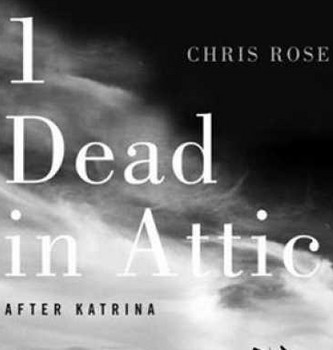
1 Dead in Attic: After Katrina, by Chris Rose – A collection of reflective and often heartbreaking columns by the Pulitzer-winning columnist for the New Orleans Times-Picayune; still incredibly compelling and moving, seven years after the storm, as a strengthening Tropical Storm Isaac approaches the northern Gulf Coast, with the Crescent City firmly in its cross hairs.
Skinny Dip, by Carl Hiaasen – a beautiful would-be murder victim survives being tossed off a cruise ship, and wreaks havoc on the self-centered wannabe marine biologist husband who committed the deed; yet another volley of often hilarious over-the-top crime and Floridiana in the Hiaasen mode, touching on myriad issues related to the environment and growth in the Sunshine State.
Green Hills of Africa, by Ernest Hemingway – big-game hunting in East Africa, circa the ’30s, spiked with philosophical observations on the art of living, the craft of writing, and the relative value of several authors; more of a slog than I’d remembered.
The Dead Zone, by Stephen King – the tale of a man who acquires psychic powers after waking up from a five-year coma; scarier and more intensely focused on psychological drama than was Terry Gilliam’s 1983 film, starring a suitably creepy Christopher Walken.
The Paris Wife, by Paula McLain – an imagined first-person account of life as Hemingway’s fourth wife (Hadley Richardson), among the beautiful people and assorted artists and writers in Paris of the ’20s; a detailed and often beautifully written evocation of the period.
Slaughterhouse Five, by Kurt Vonnegut — a brilliantly imaginative, time-tripping saga centered on Billy Pilgrim, an optometrist and World War II veteran who survived the bombing of Dresden and occasionally travels to the planet Tralfamadore; the classic of contemporary antiwar fiction was made into an uneven 1972 film directed by George Roy Hill.
One Shot, by Lee Child – a taut tale of a mass murder in small-town Indiana, the too-neat solution of the crime, and franchise tough-guy Jack Reacher’s involvement in sussing out what really happened, why, and how he can avoid getting caught in a deadly trap.
Dixie City Jam, by James Lee Burke – series hero Dave Robicheaux, a former New Orleans cop and recovering alcoholic, takes on ex-Nazis, the mob, and corrupt politician and cops; as ever, scenes of New Orleans and rural Louisiana are beautifully rendered.
My First Movie: Twenty Celebrated Directors Talk About Their First Film, edited by Stephen Lowenstein – intriguing accounts of debut movies, including close-up remembrances of the Coens’ noir thriller “Blood Simple”
Several of these books were made into films. The forthcoming “Jack Reacher” was adapted from Child’s One Shot, with Tom Cruise in the title role and a cast that includes Robert Duvall, Rosamund Pike, and acclaimed German director Werner Herzog.
Will the action flick, directed and written by Christopher McQuarrie, who directed “The Way of the Gun” in 2000 and wrote the screenplays for “The Tourist,” “Valkyrie” and “The Usual Suspects,” give Cruise’s career the shot in the arm it needs? Will its box-office success merit the launch of a new franchise? Time will tell.
 It makes sense: “The Words,” a movie largely focused on writers and the art and craft of writing, offers several nods to Ernest Hemingway.