Is Florida’s film industry running on fumes?
Several major, notable films, of course, have recently been made in the Sunshine State.
“The Florida Project,” shot on 35mm film in and around Kissimmee at a cost of about $2 million, yielded more than $10 million at the U.S. box office. The 2017 movie, directed, written, shot, edited, and co-produced by Sean Baker, landed a best supporting actor Oscar nomination for Willem Dafoe.
Barry Jenkins‘ “Moonlight” was shot digitally on location in Miami for $4 million and generated more than $65 million in box-office receipts worldwide, including nearly $28 million in the U.S. & Canada. The 2016 film won three Oscars, including best picture, and additionally notched five Oscar nominations.

Both films were critically lauded, racking up glowing reviews and landing on many year-end Top 10 lists assembled by critics and critics’ groups. The Florida Film Critics Circle honored director-writer Jenkins with its Breakout Award, and gave its annual Golden Orange Award to the cast and crew of “Moonlight.” The FFCC last year gave the Golden Orange to “The Florida Project.”
Bright Lights, Medium Cities
Walt Disney Studios spent more than $134,000 in Polk County while shooting director Thea Sharrock‘s “The One and Only Ivan” over a three-day period beginning June 20 in four locations around Lakeland — Southgate Shopping Center, Dobbins Park (both in my old ‘hood, BTW), the Silver Moon Drive-In, and on West Palm Drive.

That’s according to Visit Central Florida, as reported by Paul Guzzo in the Tampa Bay Times. The producers of the film, a vehicle for “Breaking Bad” star Bryan Cranston, above (pic posted by ABC Action News), spent their production on 363 hotel room nights, local cast, catering, miscellaneous expenditures, and locations and associated fees, Guzzo wrote. “Ivan,” a live-action/CGI hybrid movie based on the 2012 children’s book of the same name, is scheduled for release in summer 2019.
And Florida is home to at least three television series: MTV “reality” show “Siesta Key” (Sarasota County), PBS’s sketch-format show “Kid Stew,” created by superstar mystery novelist and Palm Beach resident James Patterson (South Florida), and TNT’s comic drama “Claws” (Manatee County).
Big Deal to Big Chill
In the early 1900s, when it was home to more than 30 movie studios, Jacksonville was dubbed “The Winter Film Capital of the World.” The north Florida city made a sunny, affordable alternative to New York and New Jersey, then the location — pre-Hollywood — for most film productions.

Flash forward more than a century: Big-dollar movie production in Florida largely has hit the skids in the wake of the 2015 expiration of the state’s tax incentives for filmmakers.
More than 60 major film and television productions opted out of shooting in Florida in recent years, at a cost of about $1 billion in lost revenue, according to Film Florida, a not-for-profit entertainment production trade association. That doesn’t include the collateral damage: Nearly 90,000 lost cast and crew jobs.
“Due to the lack of competitive incentives, productions are going elsewhere,” Variety noted last year, pointing to producers’ decisions to shoot Florida-set scenes in Ben Affleck’s “Live by Night,” and “Gifted,” starring Octavia Spencer, in Georgia.
HBO’s “Ballers” series, starring Dwayne “The Rock” Johnson, below, and once based in Miami, left to take advantage of California’s more appealing tax incentives. The third and final season of Netflix original “Bloodlines” nearly left the Florida Keys for the same reason.

During the five years they were in effect, Florida’s incentives — a 20% base tax credit in 2010, with additional 5% increases for shooting in the off-season (June 1-Nov. 30) and for family-friendly productions — meant that the state essentially paid out nearly $300 million. But Florida gained from filmmakers’ production expenditures in the state of more than $1.25 billion, according to Variety. The production activity also drove the creation of nearly 120,000 jobs.
Several sequences in “Iron Man 3” were shot in the state during that period, along with the features “Rock of Ages,” “Step Up Revolution,” “Pain & Gain,” and the Starz series “Magic City.”
“The Infiltrator,” also starring Cranston, was partially filmed in 28 locations around the Tampa Bay area in April 2015. Hillsborough County spent about $250,000 to bring the film to the area, and the county benefited from $490,000 in direct expenditures and $145,942 in indirect spending, according to a report by Tampa marketing research firm HCP. (Producers of the $25 million film said that they would have filmed the bulk of the movie in Florida had the incentives been more attractive).
Got Tax Incentives?
Thirty-five states and Puerto Rico offered substantial filmmaking tax incentives — some, like Oklahoma, as high as 35% — as of April 1, according to data assembled by Cast and Crew Entertainment Services.
Florida is out of the running. But other Southern states are getting busy: Kentucky is offering at least 30% in incentives, followed by Alabama (25%+), Louisiana (25%+), Tennessee (25%), North Carolina (25%), Georgia (20%+), South Carolina (20%+), and Arkansas (20%+).
The state of Florida does, however, offer a “Film in Florida Sales Tax Exemption,” a narrowly defined sales- and use-tax exemption to those engaged in film and television production. The exemption is restricted to “the purchase or lease of certain items used exclusively as an integral part of the production activities in Florida,” according to information on the state’s Department of Revenue web site.
Building a Wall to Keep Out Hollywood
So why did Florida’s GOP-dominated legislature back away from providing economic incentives to moviemakers?
Blame it on “ideological” opposition to Hollywood productions, says Gwen Graham, a Democratic candidate for Florida governor.
“It’s a philosophical problem. That’s what it is,” she recently told a roomful of Sunshine State film and television production professionals, including John Lux, executive of Film Florida, according to a report by Scott Powers of FloridaPolitics.com.
Lux, Michael Jordan of MJJ Entertainment and Filmotechnic USA, Winter Park-based actor Tom Nowicki (“The Blind Side,” “Remember the Titans”), UCF film professor Lisa Mills, and other industry stakeholders met last week at Edgewood-based Adrenaline Films.
“(They) argued that the costs to Florida include the losses of high-paying jobs associated with each production, the potential to develop permanent film production businesses in Florida, the tourism boost a movie or TV show can provide, and a source for careers for actors and college graduates coming out of Florida’s film schools,” Powers wrote.
Graham and her Democratic primary rivals — the ones without recognizable surnames — have all vowed to bolster the state’s film industry.
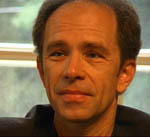
The state’s efforts to attract film productions largely have failed because “leadership in the Florida legislature is not in the mindset of having public/private partnerships,” as Rep. David Silvers (D-Lake Clarke Shores), below, told Philip’s Flicks.

A Sliver of Lights, Camera, Action
Silvers, who represents a district located in central Palm Beach County, last year again filed a bill, HB 341, calling for the creation of the Florida Motion Picture Capital Corp., as part of his ongoing quest “to bring the film industry back to Florida.”
“Regardless of this mindset, I filed the bill the last two years because I want to ensure that the Florida film and digital media industry knows that some of the legislators support the industry and understand the positive impact on our economy,” he said.
According to the Tampa Bay Business Journal, the proposed corporation, instead of offering tax credits or rebates, was designed to operate “under a more traditional investment model where the group would directly invest in a film with the hopes of making money on the back end. Revenue derived from those investments would be reinvested into the corporation for future films. The bill does not specify how the corporation would be initially funded, but lays out a framework to collect local and state funding.”
In March, the bill died in the Florida House’s Careers and Competition Subcommittee.
“I plan on filing this legislation upon my reelection,” said Silvers, a freshman legislator facing attorney Edgardo Hernandez in the November primary. Silvers said he’s unaware of any other ongoing efforts by legislators or state officials to bring more Hollywood dollars to the Sunshine State.
The film industry may be undergoing a sea change in movie-production locations, according to a recent report by FilmL.A. Only 10 of the top 100 movie moneymakers were shot in California in 2017. The Golden State finished fourth, behind Canada (20 of the biggest box-office hits), the U.K. and Georgia (15 each).
*************************
On the heels of Miami-Dade County’s rebate of $100k for film or TV productions spending at least $1 million in the county, ArtCenter/South Florida is putting its focus on indie filmmakers by making $50k available to each of two movies shot in Miami.
The New Cinematic Arts Residency will be led by Jason Fitzroy Jeffers, below, a local filmmaker and the director and co-founder of the Third Horizon Film Festival,” Hans Morgenstern wrote in Miami New Times. “He says the program fills a void for those, like him, who have found themselves with a successful short film but nowhere else to go from there.”

Applications for the funding are available through Sept. 18 at artcentersf.org/cinematicarts.
*************************
Meanwhile, the Greater Fort Lauderdale Convention and Visitors Bureau gave $313,000 to NZK Productions Inc. to shoot a single episode of “reality” romance show “The Bachelor,” according to the Miami New Times. Your resort tax dollars at work.
Have Florida film news? Contact Philip Booth at jphilipbooth@hotmail.com


 Things are tough all over, and that includes the Tribeca Film Festival, which just announced a program that’s 28% slimmer than last year’s last year’s lineup – 86 films, down from 120 in 2008.
 The Oscar bounce — the uptick in attendance when any particular movie lands Academy Awards nominations — once was the cart placed before the horse of movie productions.