Stars Arnold Reyes, Menggie Cobarrubias, Ella Guevara. Directed and written by Ron Morales. 84 minutes. Critic’s grade: A- (reviewed at the Gasparilla Film Festival)
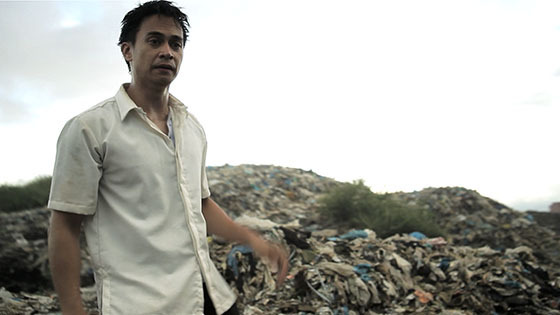 The Manila of gritty crime thriller “Graceland” isn’t the sparkling Asian capital city of tourist brochures, a place with ultra-swanky hotels, a bustling business district, eclectic high-end restaurants and colorful weekend markets.
Instead, the movie, the second feature directed and written by Filipino-American filmmaker Ron Morales, mostly occupies the seamy side of the metropolis. It’s there, in a grimy, claustrophobic hovel, where Marlon (Arnold Reyes) lives with his daughter Elvie (Ella Guevara). The two spend the bulk of their off hours visiting her mom, Lina (Angeli Bayani), Marlon’s dying wife, at a sub-par medical facility, where she awaits an organ transplant; it comes across as the kind of poorly managed, unhygienic place where prospects of leaving are slim to none. At home, father and daughter kneel in prayer, hoping against hope for Lina’s recovery.
Elvie spends her days at an upscale private school, the place that apparently takes the bulk of the salary Marlon receives as a driver, personal assistant and all-around fixer for a wealthy, high-powered senator named Manuel Chango (Menggie Cobarrubias). During the film’s opening sequence, Chango is revealed as a vice merchant of the lowest order, a man who seeks out the youngest prostitutes, and assigns Marlon the task of handling any messy complications.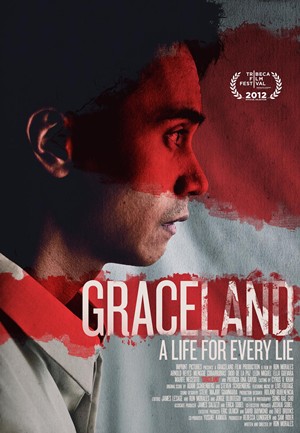
Moral turpitude — the behavior of Chango, and Marlon’s complicity as an accessory — rolls downhill, Morales seems to suggest in “Graceland,” with consequences raining onto the next generation. “Karma bites back fast,” as an acquaintance tells Marlon. This time, the sins of the fathers fall on their daughters when, in a case of mistaken identity, Elvie is embroiled in a kidnapping plot that also has a devastating impact on Chango’s daughter, Sophia (Patricia Gayod).
In order to guarantee Elvie’s safe return, Marlon agrees to follow the kidnapper’s directives, which include lying to Chango and to the police; the deception he’s forced to visit upon Chango is particularly grievous. Consequently, the desperate Marlon is bullied by an aggressive, rules-bending cop (Dido De La Puz), who believes Marlon to be party to the kidnapping plot. Marlon has a built-in motive: he was fired from his longstanding job after the senator became mired in a public scandal stemming from discovery of his illicit activities. The lies grow increasingly more thick, as do the complications, and Morales effectively ramps up the intrigue.
As Marlon and, eventually, Chango, burrow deeper and deeper into the criminal underground, including a harrowing, horrifying visit to a brothel overflowing with underage prostitutes, a sense of dread begins to permeate the proceedings. Will anyone get out alive? Can the kidnapper be trusted to keep his promises?
“Graceland,” which has a plot bearing some resemblance to Kurosawa’s “High and Low,” also concerning a mistaken identity and a child abduction, on the surface is about a kidnapping, and the drive to track down the perpetrators. But the story effectively opens up to emphasize larger themes, including corruption in high places, the horrors of the child sex trade and human trafficking, and, as mentioned, the ugly fruits of bad behavior.
Thanks in large part to Reyes’ sympathetic performance as an emotionally tortured father seemingly willing to sacrifice his life for the safety of his child, and despite some characters that border on stock roles, “Graceland” works on multiple levels — as a tense, suspenseful thriller, a violent action film, a powerful human drama, and a treatise on the consequences of moral decay. Marlon is caught in a trap, one from which he may not escape. Morales effectively lets viewers feel as if they are mired in the same muck, right stuck there with Marlon, unable to escape or to shower off the filth.